Running a relay
The PDS is a single Rust binary with a SQLite database, designed to be easy to host.
Health
Section titled “Health”Every deployment exposes a health endpoint the platform can watch:
curl -sS https://your-pds.example.com/xrpc/_healthA healthy server reports its version, derived from the same workspace version these docs stamp, so the server and its documentation cannot claim different versions.
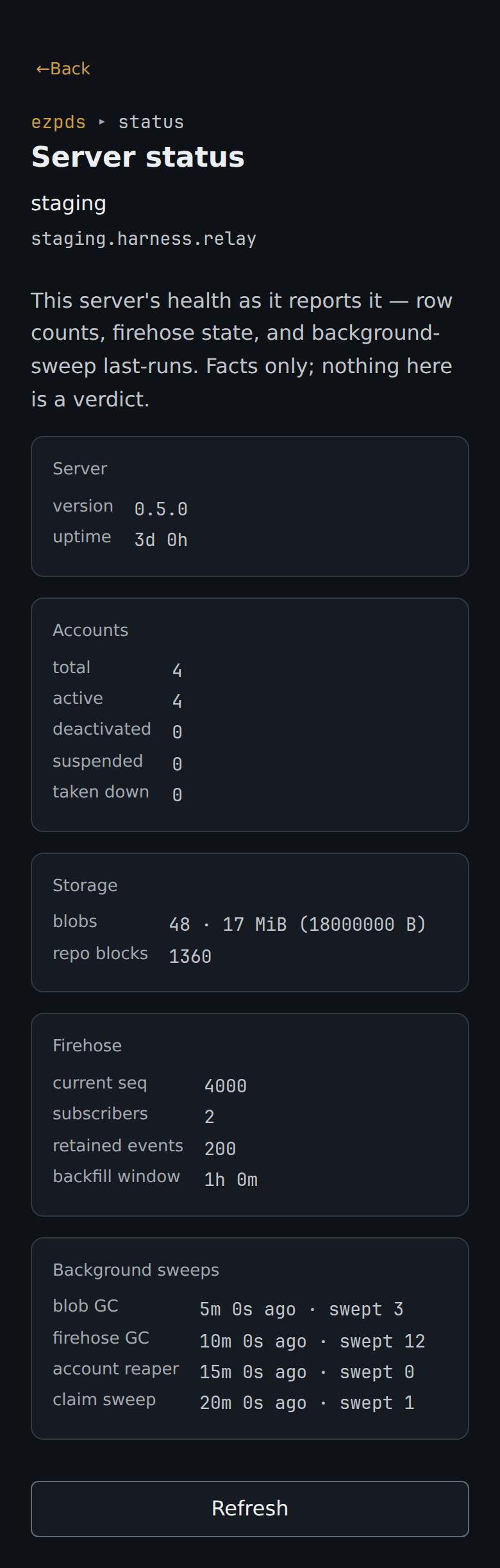
On a degraded relay, the same readout flags each troubled background sweep with
a trailing ! glyph and a named fault. A sweep whose last completed pass keeps
aging reads stale: passes have stopped completing, so the sweep is dead. One
that completed but skipped work reads failed <n>: it ran, yet recorded n
errors (for blob GC, an account whose reconcile failed is skipped, so its blobs
stay uncollected until the fault is fixed). Naming both keeps them legible apart
on a row that has both, without relying on color.
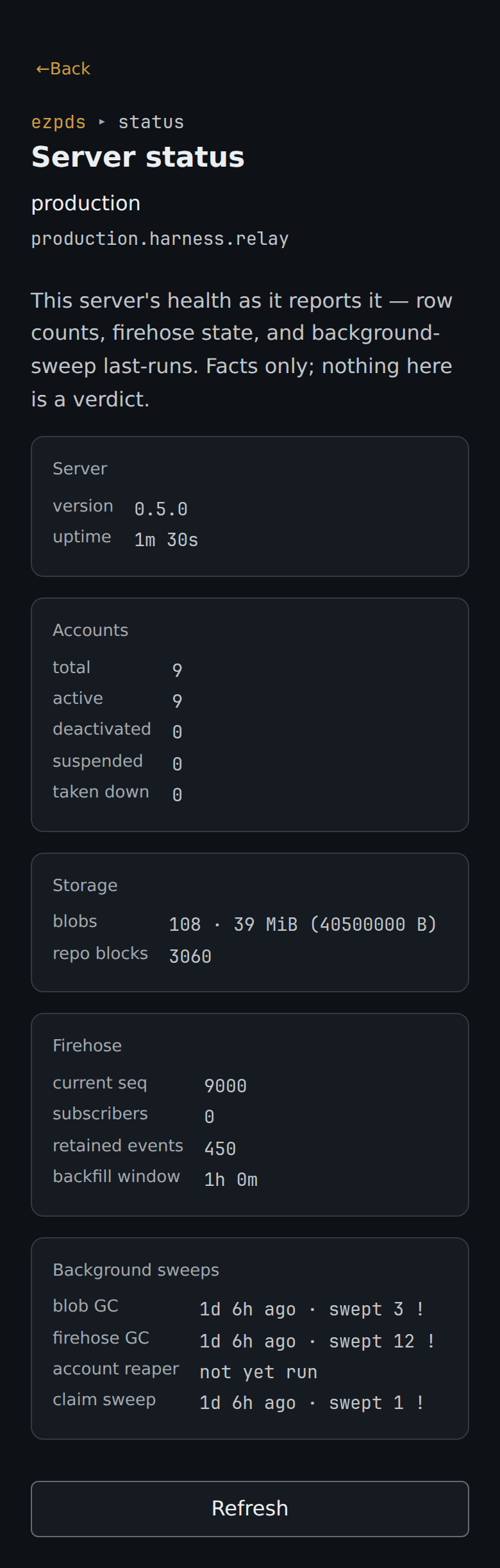
! glyph, never color alone.Is the upstream relay seeing you?
Section titled “Is the upstream relay seeing you?”A healthy server that no relay is crawling is invisible to the network, and an upstream relay can silently drop your subscription. The console’s Home screen carries a Relay federation block that compares your server’s exact sequencer head against what the upstream relay reports for your host: the relay’s lifecycle status, its cursor, how many events it is behind, and when it last consumed one. Request crawl re-invites the relay on demand: the recovery move when the readout says the relay has stopped listening.
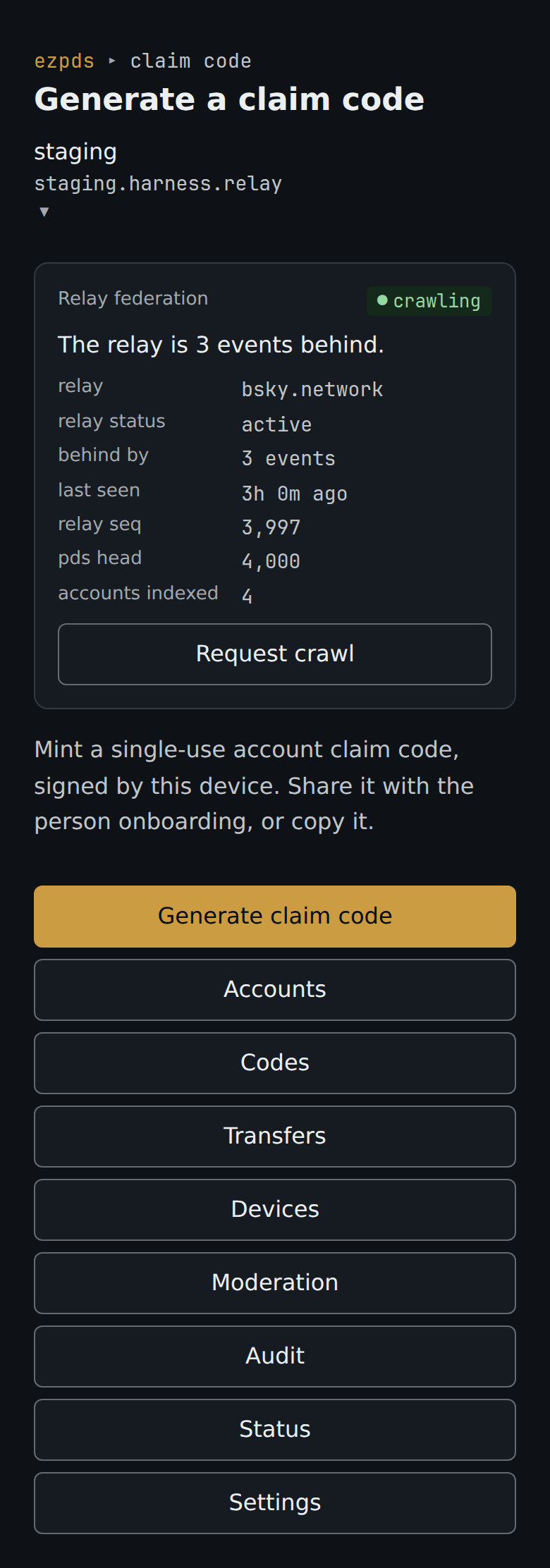
The same facts are served at GET /v1/admin/relay-status and the re-invite at
POST /v1/admin/request-crawl — see the API reference.
What you are responsible for
Section titled “What you are responsible for”- Durability — the SQLite database is the identity store. Back it up. Production streams continuous backups to object storage with Litestream — see Backups & restore.
- Availability — users’ clients reach your server to read and write. Health checks and restart policy are your safety net.
- You can’t lock anyone in — you hold the lowest-precedence rotation key;
the user’s device key (
rotationKeys[0]) and their recovery key outrank it, so they can move their identity to another server whenever they choose. Design your operations for that.
Deploy
Section titled “Deploy”The server deploys as an OCI image (Railway builds the Dockerfile directly).
The full runbook (staging vs production branches, Litestream backups, and the
security posture) lives in the repository’s docs/deploy.md.